High Velocity Oil Flushing
High Velocity Oil Flushing
Ensure System Cleanliness of Critical Lubrication and Hydraulic Systems
High Velocity Oil Flushing (HVOF) is a critical step in the commissioning of turbomachinery and industrial hydraulic systems. Whether it’s performed on a new or existing system, high velocity oil flushing is necessary to remove harmful particulate contamination prior to startup — utilizing specialized high-flow filtration skids to generate enough turbulent flow within the flushing circuit to dislodge particulate from the interior surfaces of piping.
What Does HVOF Remove?
Lubrication systems often accumulate contamination during the pipe fabrication and installation process and through normal operation. These contaminants include:
- ✓Welding Slag
- ✓Wear Metals
- ✓Rust and Corrosion Debris
- ✓Dirt
- ✓Varnish / Sludge / Oil and other deposits
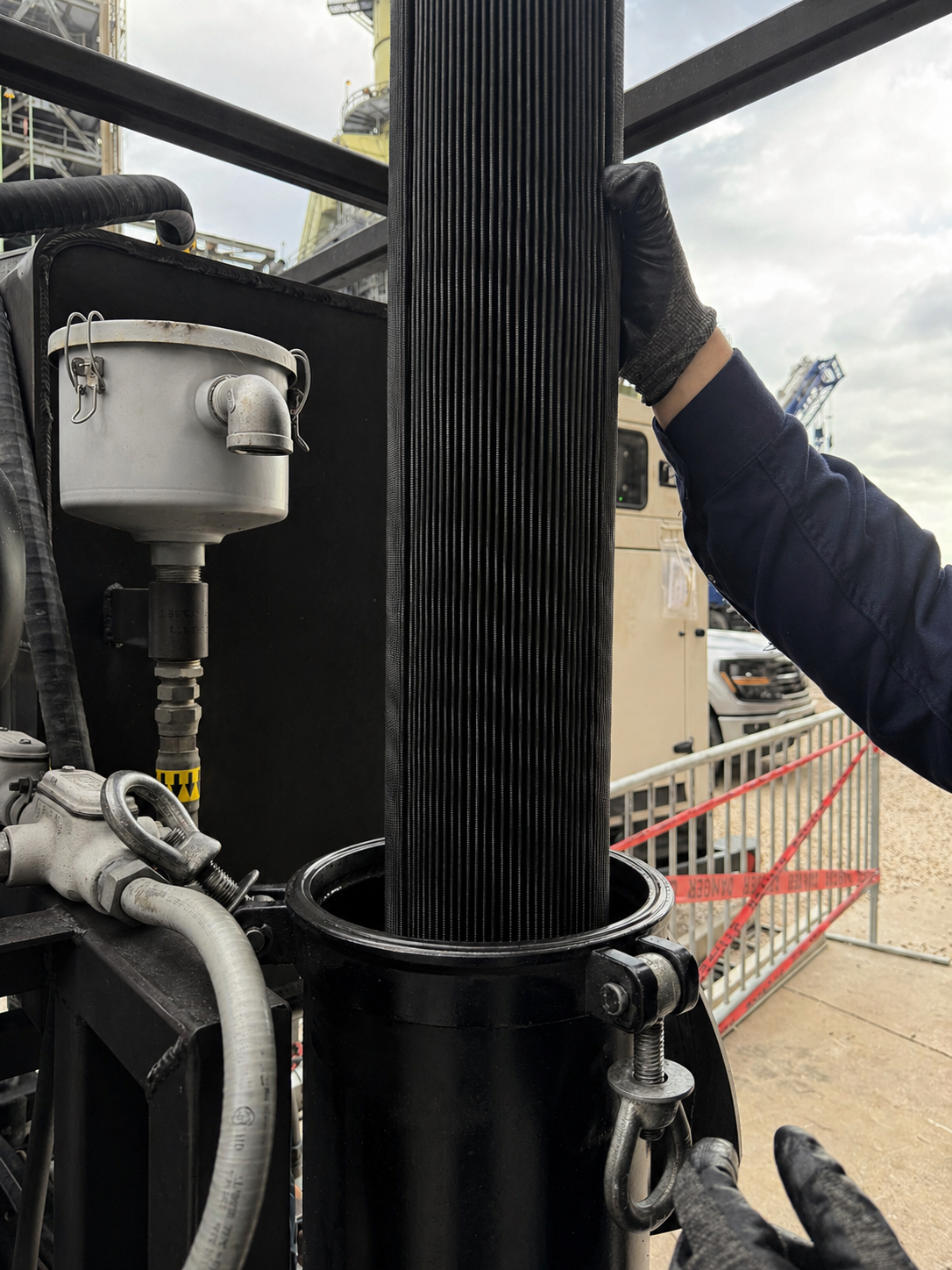
6 X 36″ Beta 1000 microglass filter elements are used to efficiently remove particulate from lube oil.
When Is HVOF Required?
Startup of New System
While a new turbine or compressor may come factory sealed from the OEM, the lube oil supply and return lines are almost always assembled and fabricated in the field — introducing welding slag, dirt, debris, water, and various residues from commissioning activities such as pickle and passivation.
Post-Failure
A sudden failure of a bearing, seal, or gearbox can scatter wear metals and debris throughout a lube oil system. Even after the repair, failure to remove that debris can potentially cause another failure down the road.
Product Conversion
Some product conversions — such as converting from a phosphate-ester to a PAG — require high-level cleaning to fully remove residual products from the lube oil system. Specialty cleaning agents are often added during the flush.
Preventative Maintenance
HVOF is often performed as part of a 5–10-year preventive maintenance activity on critical equipment, especially systems exposed to harsh environmental contaminants that struggle to maintain ISO 4406 particle cleanliness.
How Does HVOF Work?
Under normal operating conditions, lubrication systems circulate oil in laminar flow — smooth layers with relatively low velocity. HVOF dramatically increases flow velocity using specialized high-capacity flushing pumps, circulating oil at 3–4 times the system’s normal operating flow rate. This creates turbulent flow conditions that significantly increase the shear forces acting on debris adhered to pipe walls.
While turbulent flow generally begins at a Reynolds number above 4,000, effective oil flushing targets Reynolds numbers in the 15,000–25,000 range or higher to maximize particle mobilization. During the flush, oil is routed through temporary high-efficiency filtration systems while critical components — such as bearings, servo valves, or coolers — are bypassed to protect sensitive equipment.
Techniques to Enhance Effectiveness
- ✓Dry Gas Sparging — Introducing dry air or nitrogen into the oil stream to create agitation and additional turbulence
- ✓Mechanical Knocking — Vibrating or striking piping to dislodge particles adhered to pipe walls
- ✓Thermal Cycling — Alternating oil temperatures to expand and contract piping, helping release embedded debris
- ✓Reverse Flow Manifolding — Periodically reversing oil flow direction to mobilize trapped contaminants
What We Deliver
- ✓Safe job execution with Daily Job Safety Analysis (JSA)
- ✓Turn-key project planning and execution
- ✓300–2,000 GPM flushing skids with heaters
- ✓API 614 Stainless Steel 100 mesh screens used for verification
- ✓100% 316 stainless steel braided jumper hoses & fittings
- ✓6X Turbulent Flow — Over 24,000 Reynolds Number
- ✓Confined space reservoir cleaning
- ✓Filter fill & kidney loop filtration to OEM ISO 4406 cleanliness specifications
- ✓Detailed Post Job Reporting
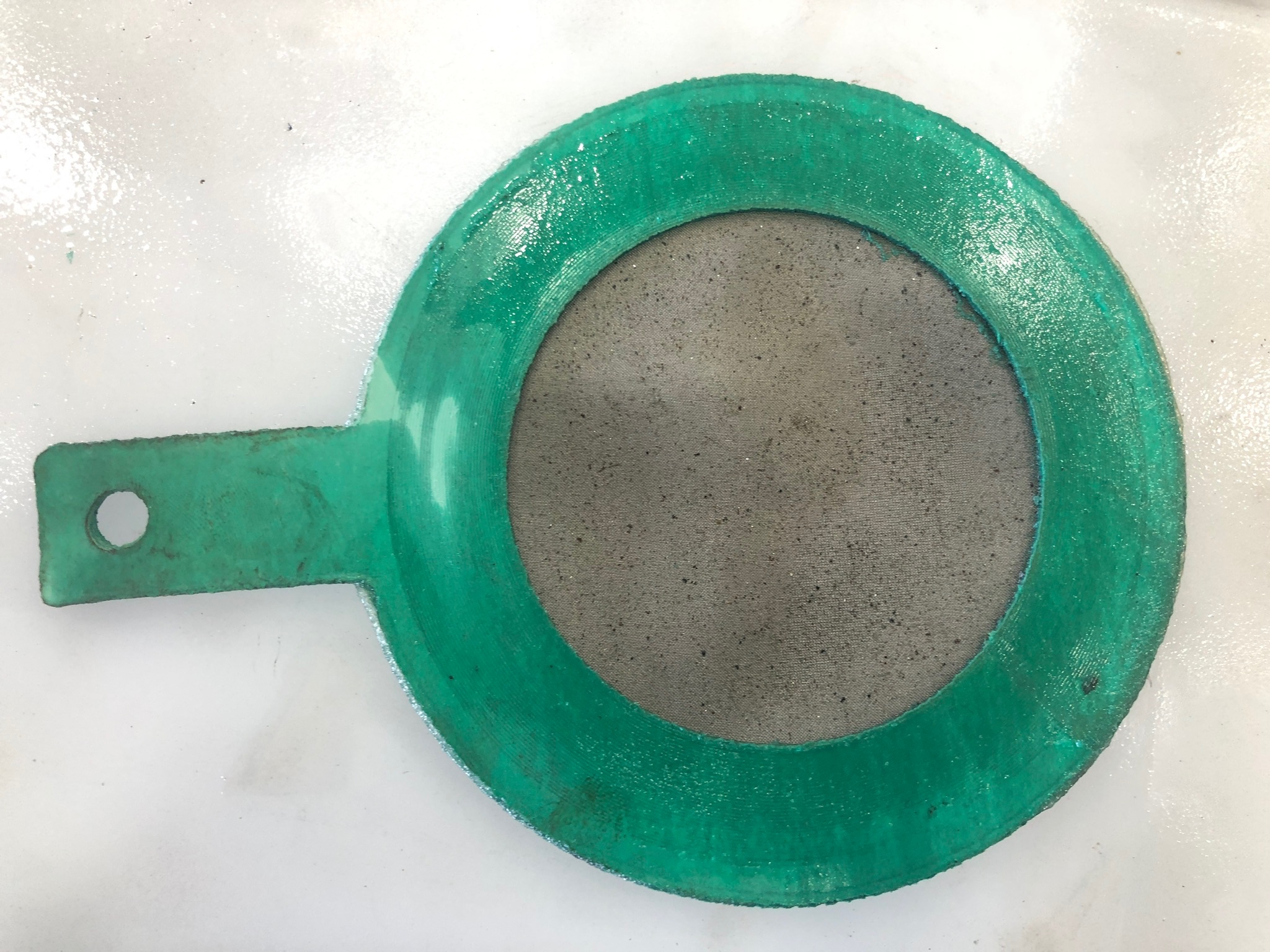
100-mesh stainless steel paddle screens are used to gauge the progression of an oil flush by identifying metallic and non-metallic contaminants captured in the flushing circuit.