Oil Filtration & Dehydration
Oil Filtration & Dehydration
Remove Particulate and Water Contamination from Your Lubrication System
Two of the most common and damaging contaminants found in industrial lubricants are particulate and water. Left unaddressed, both significantly shorten the life of your lubricant and equipment. McPherson Oil provides filtration and dehydration solutions to bring your oil to OEM cleanliness specifications and keep it there.
Oil Filtration
As the leading cause of bearing wear, particulate contamination is one of the most common causes of lubrication-related failures. As OEMs design rotating equipment with tighter bearing and mechanical tolerances, the harmful effects and economic impact of particulate contamination have increased exponentially.
Effects of Particulate Contamination
Effect on Lubricant
- •Accelerated Oxidation
- •Shortened Oil Life
- •Foaming
- •Heat
Effect on Equipment
- •Reduced Bearing Life
- •Wear (Erosive, Abrasive, & Fatigue)
- •Seal & Component Damage
- •Valve Jamming / Stiction
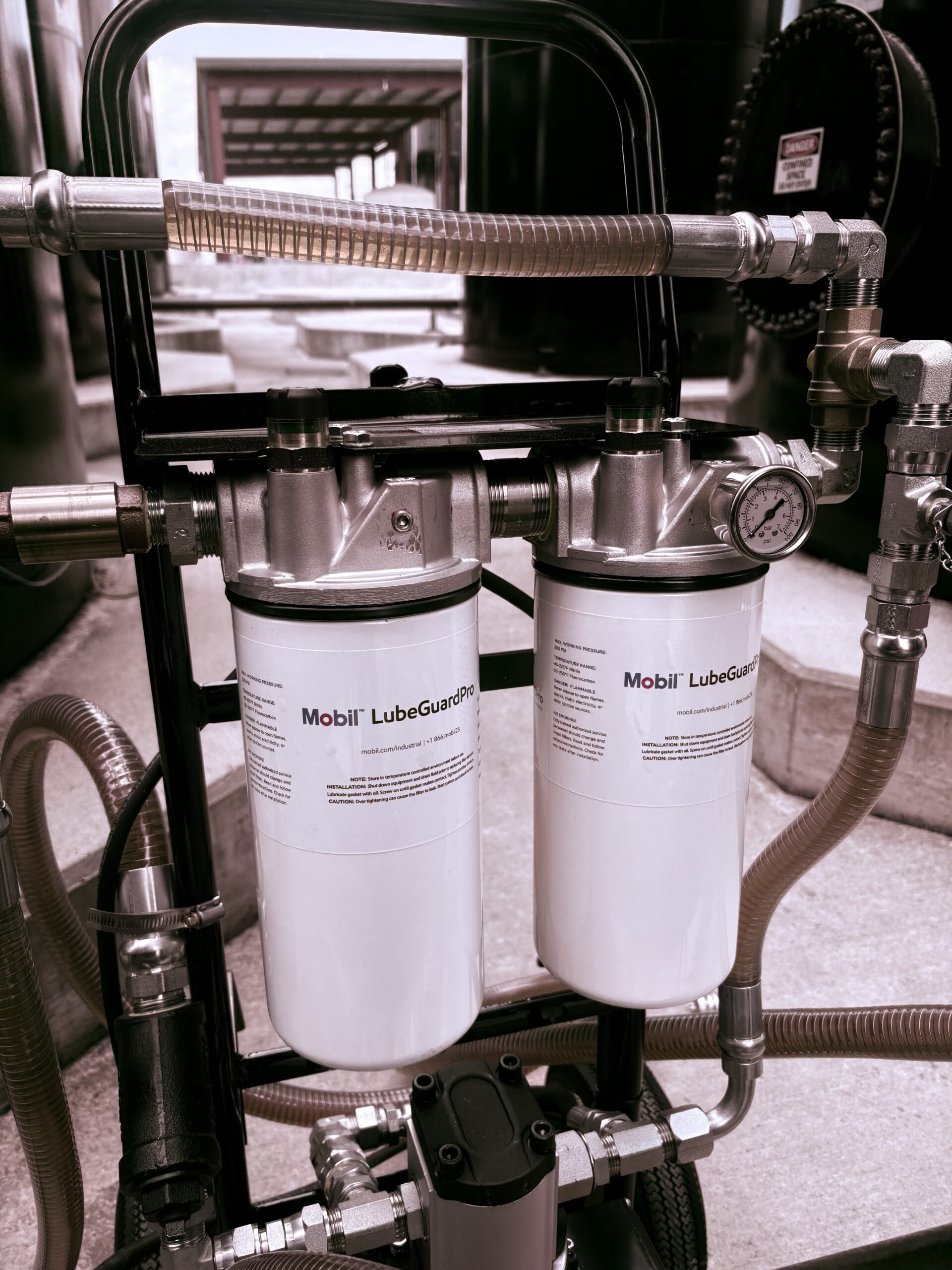
10GPM Filter Cart with Mobil LubeGuard Pro Spin-on Filters
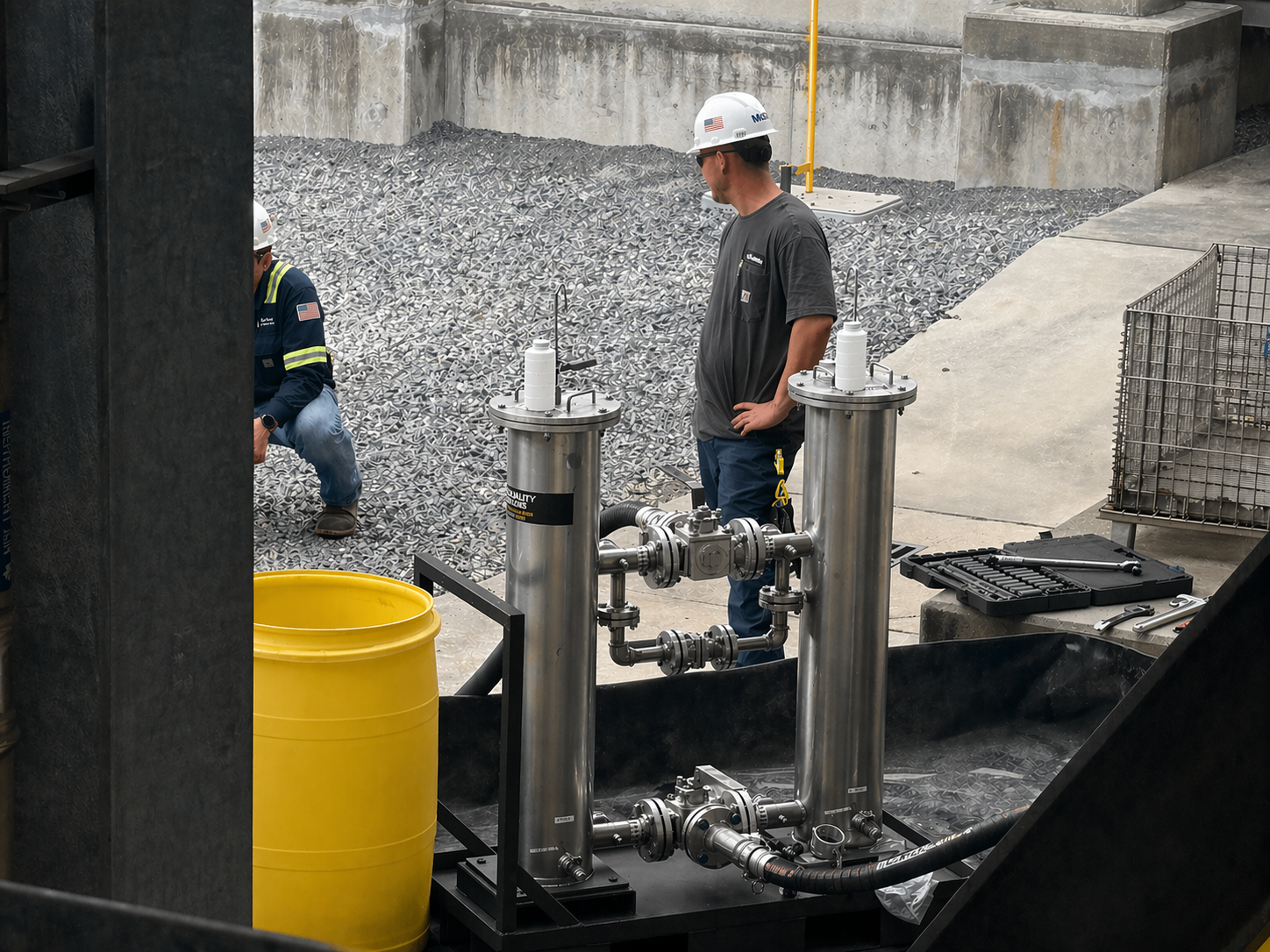
Duplex Filter Housing
Oil Dehydration
Water is one of the most common and harmful contaminants found in industrial lubricants. If not properly removed, water promotes oxidation, varnish formation, additive dropout, bearing wear, and significantly shortens the life of both your equipment and lubricant. Water finds its way into lubricants through atmospheric humidity, poor contamination control practices, and through failed seals in systems where water is part of the process — such as boiler feedwater pumps or steam turbines.
Effects of Water Contamination
Effect on Lubricant
- •Oxidation
- •Additive Depletion
- •Varnish Formation
Effect on Equipment
- •Decreased Film Strength / Thickness
- •Reduced Bearing Life
- •Cavitation & Micro-Dieseling
- •Corrosion & Rust
Water Content Risk Table
| Water Content | Risk Level | Recommendation |
|---|---|---|
| <100 ppm | Ideal | — |
| 200–500 ppm | Warning | Monitor with oil analysis / Consider desiccant breather |
| 500–1,000 ppm | High Risk | Vacuum Dehydration / Water absorbent media filtration |
| >1,000 ppm | Severe | Vacuum Dehydration is required |
Why Vacuum Dehydration?
Vacuum Dehydration is one of the most effective methods of removing water from turbine oil, hydraulic oil, gear oil, compressor oil, and other industrial lubricants. It removes:
- ✓Free Water
- ✓Emulsified Water
- ✓Dissolved Water
- ✓Entrained Gases
How Does Vacuum Dehydration Actually Work?
While water typically boils at 212°F at standard atmospheric pressure (sea level), under a vacuum — typically 25–29 inHg for a vacuum dehydrator — the boiling point of water in the lube oil can be lowered to as low as 140°F. This allows water to be safely removed without oxidizing the oil or heating it to extreme temperatures.
Vacuum dehydrators remove free, emulsified, and dissolved water and even entrained gases from lube oil, achieving water content as low as 50 ppm.
In addition to removing water, our vacuum dehydrators are equipped with high-capacity filter elements to filter the oil to as low as ISO 4406 16/14/11.
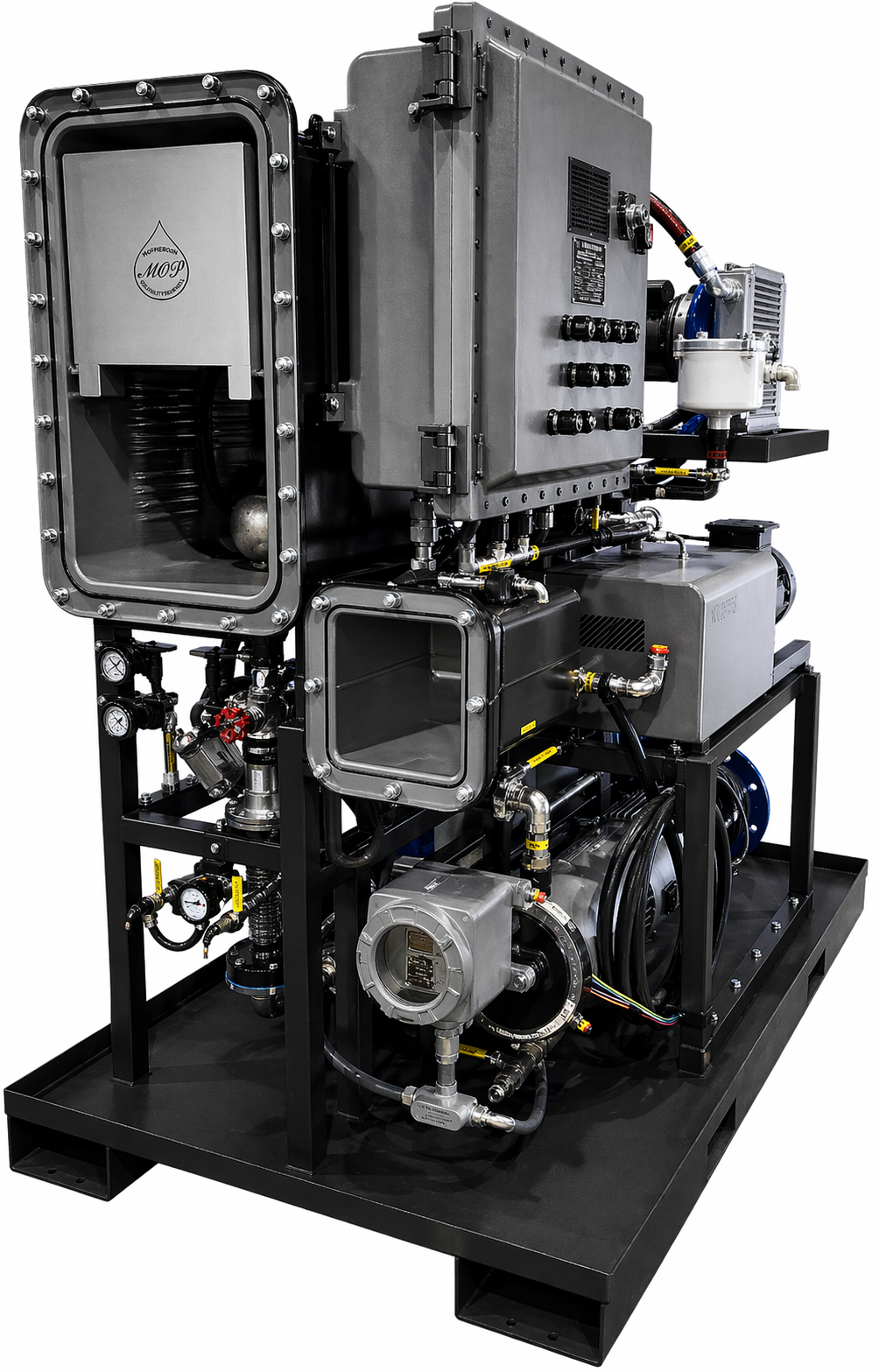
20 GPM Vacuum Dehydration System
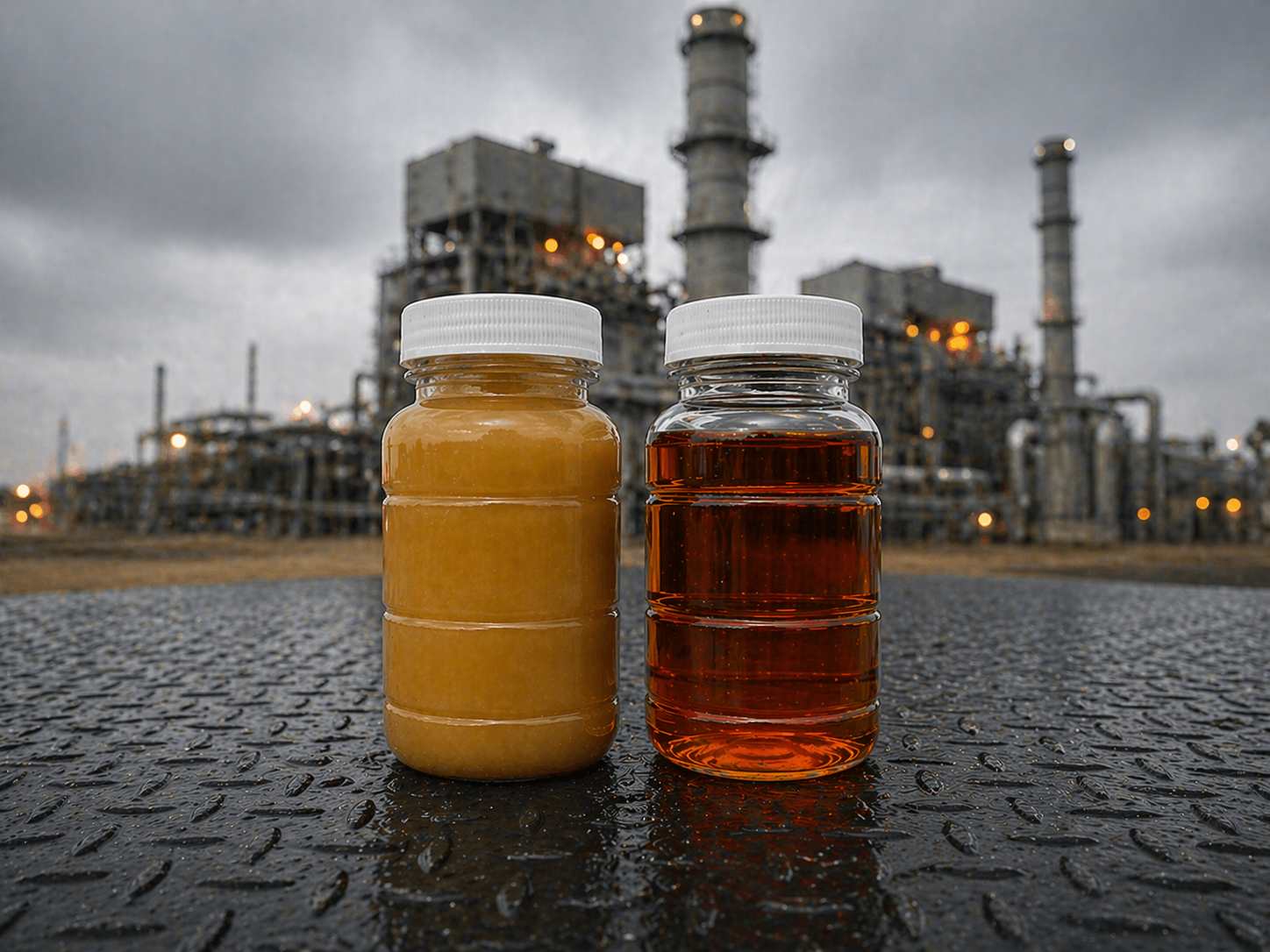
Before & After Dehydration
What We Deliver
- ✓Kidney loop filtration systems to OEM ISO 4406 cleanliness specifications
- ✓High-efficiency filter elements and on-site filtration services
- ✓20 GPM, 30 GPM & 50 GPM Vacuum Dehydrators
- ✓NEMA 7 / Class 1 Div 2 Compliant Systems
- ✓Delivery, Setup & Troubleshooting
- ✓Turn-key Package with Generator Rental (when 480V 3-Phase power is unavailable)
- ✓Equipment Rentals, Sales & Repairs